
HydroHub™ A-675 PEM Engine Enhancement System
Mid-output PEM hydrogen-oxygen enhancement unit for 2.0 – 2.5 L gasoline, diesel, LPG and hybrid platforms. Delivers 675 ml/min of mixed H₂/O₂ into the air intake to support more complete combustion across mixed-duty fleet operation.
Suitable for diesel 4×4 fleet vehicles, compatible with mining and off-road transport, and ideal for utes, vans, and 4WD fleet vehicles.
Free worldwide delivery — DDP (duty paid). No customs charges on arrival.
Duties & taxes are included on most destinations. Select your country for the exact arrangement.
Published price. Buy today — no quote required. One unit is enough to start a field evaluation on your own duty cycle.
Ordering multiple units? Bulk pricing is available — Request a Fleet Quote →
Hardware-only supply. See the installation guide for the full fitting process before you order.
Dual-layer anti-flashback design, no gas storage. Why oxyhydrogen is safe by design
Fleet trial programme →One resin filter is included with every HydroHub™ system. Replacement resin filters are available separately and are typically replaced every 6–9 months depending on water quality and operating conditions. Shop replacement filters →
Free worldwide delivery. Duties & taxes included on most destinations; where pre-payment isn't permitted, the carrier collects them on arrival. 12-month manufacturer warranty. See Shipping & duties by country for the exact arrangement for your destination.
Which system is right for me?
Match the system to your vehicle, engine and operating environment. Your current selection is highlighted; tap any other row to compare side-by-side.
- Vehicle
- Passenger cars · light vans · taxis
- Engine
- 1.0 – 1.8 L · gas / diesel / LPG / hybrid
- Use
- Daily-driver fuel-economy & emissions reduction
- Vehicle
- Sedans · SUVs · crew-cab utes · service fleets
- Engine
- 2.0 – 2.5 L · gas / diesel / LPG / hybrid
- Use
- Mixed-duty fleet operation
- Vehicle
- 4WDs · light trucks · light commercial
- Engine
- 2.7 – 7.0 L · gas / diesel
- Use
- Large passenger & light commercial duty
- Vehicle
- Heavy commercial trucks · 20–30 kW gensets
- Engine
- Up to 7.0 L · diesel · natural gas · LPG
- Use
- Continuous-duty industrial · generator sets
- Vehicle
- Prime movers · road trains · large gensets
- Engine
- Up to 16.0 L · diesel · natural gas · LPG
- Use
- Line-haul transport · large stationary engines
Between sizes? Choose the larger system — running below rated capacity extends stack life. Indicative delivered prices shown; freight, duties and taxes included on most destinations. See Shipping & duties by country.
Technical specification
Catalogue specification. Real-world figures depend on engine condition, duty cycle, installation quality and ambient.
| Rated engine displacement | 2.0 – 2.5 L |
|---|---|
| Mixed H₂/O₂ output | 675 ml/min |
| Voltage | 12 – 24 V DC |
| Current / power | 15 A · 130 W |
| Water tank | 1.0 L |
| Water quality | Deionised / purified, TDS ≤ 5 µS/cm |
| Dimensions | 230 × 184 × 280 mm |
| Net weight | 7.8 kg |
| Outlet line | 8 mm OD |
| Fuel compatibility | Gasoline · Diesel · LPG · Hybrid |
Does this need a separate power source?
No. The system draws directly from the vehicle or genset's existing 12/24V electrical system — no separate battery bank, power supply, or generator required.
No projected, typical or expected fuel-saving figure is published. Actual results vary materially with engine condition, duty cycle, load profile, fuel quality, installation and operating conditions. A controlled field evaluation on your own equipment, with baseline data captured before installation, is required before any commercial projection.
Evidence for this system: the measured HHO fuel savings evidence and PEM hydrogen fuel savings data we publish, with test conditions, are in field results, and the baselining method is set out in fuel efficiency. Power and driveability observations are in engine performance, exhaust-side observations in emissions reduction, and you can model your own duty cycle with the fuel savings calculator.
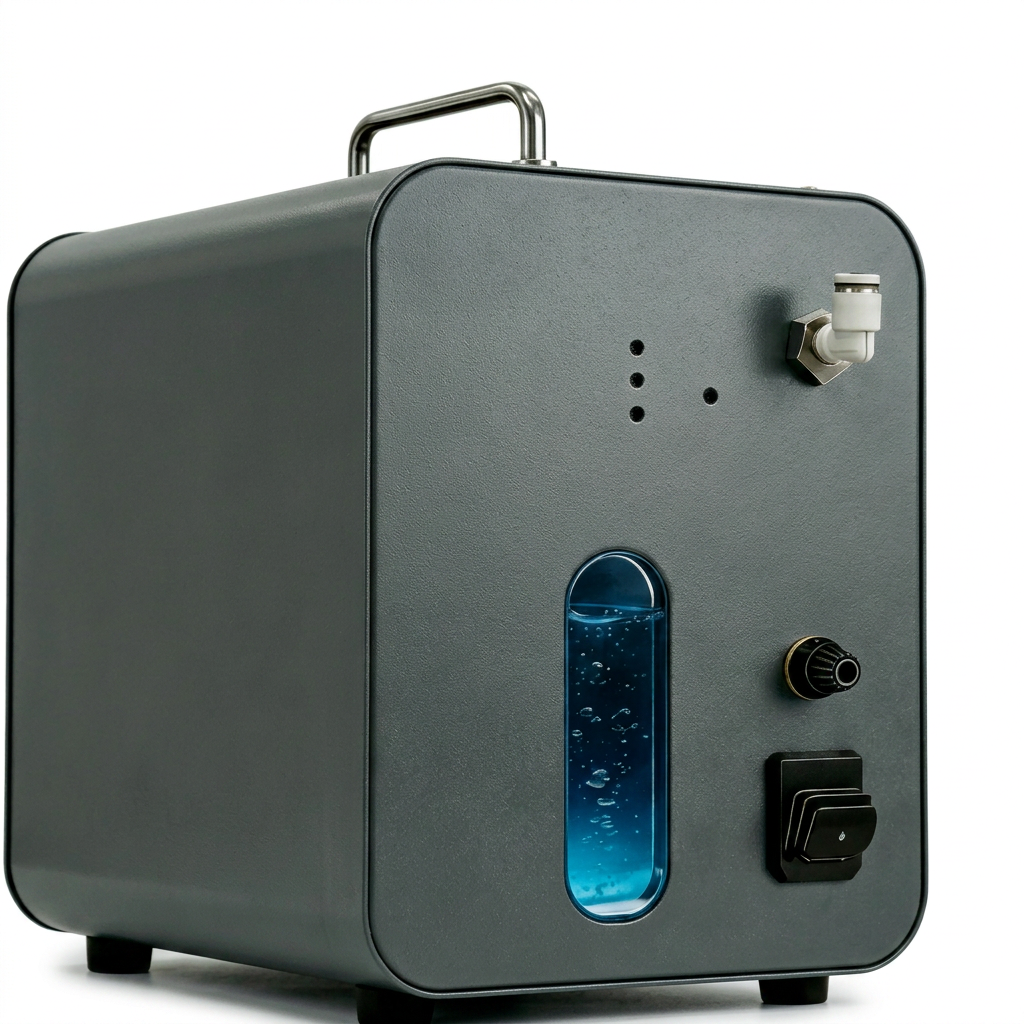
System Dimensions
Compact PEM Engine Enhancement System
Silhouettes drawn to true relative scale against the 280 mm-tall enclosure.
- · PEM enclosure: 280 mm
- · 600 ml water bottle: ~240 mm
- · Carry-on case: ~550 × 400 mm
| A-450 | A-675 | A-900 |
|---|---|---|
| 7.5 kg | 7.8 kg | 8.1 kg |
Compact installation footprint suitable for: sedan boot/trunk · SUV cargo area · utility vehicle storage compartment · generator-set enclosure.
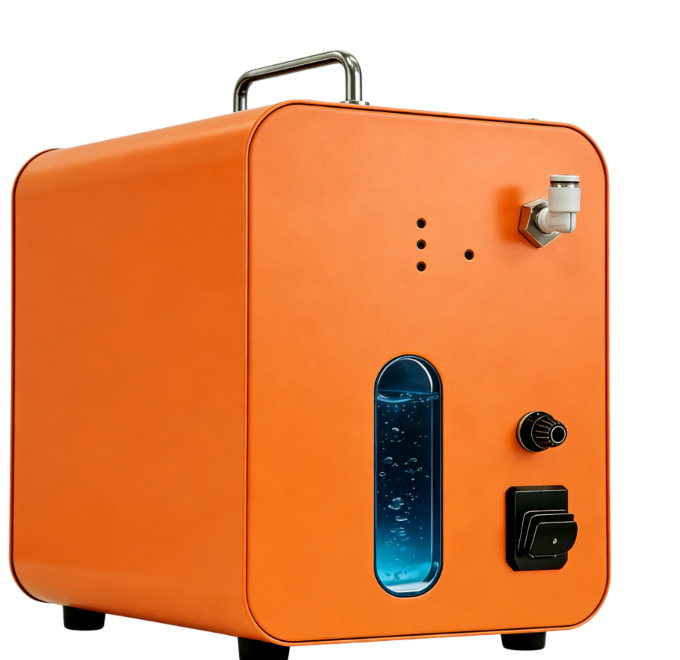
Overall dimensions (L × W × H): 230 × 184 × 280 mm. The enclosure occupies less space than a typical mid-tower desktop PC and is designed for compact vehicle and generator installations.
HydroHub™ A-675 PEM Engine Enhancement System — Frequently Asked Questions
Will this work with my engine?
Match the unit to your engine displacement. If you are between sizes, choose the larger one. For mixed fleets the Compare page lists all 5 units side-by-side.
Do I need to modify the engine or ECU?
No. The unit is installed non-destructively. Mixed hydrogen-oxygen gas is introduced upstream of the air intake; the fuel system, ECU and after-treatment are not modified.
Does this need a separate power source?
No. The system draws directly from the vehicle or genset's existing 12/24V electrical system — no separate battery bank, power supply, or generator required.
What water do I use?
Deionised or purified water only — TDS ≤ 5 µS/cm. The onboard ion-exchange resin polisher (heavy-duty units) maintains feedwater quality. Do not add caustic electrolyte.
How long does shipping take?
Compact units typically dispatch in 3 – 7 business days; heavy-duty units in 7 – 14. Freight time depends on destination.
Is the unit covered by warranty?
Yes — 12-month limited warranty on stack, electronics and cabinet. See the Warranty page for full terms.
Frequently purchased together
One resin filter is included with every HydroHub™ system. Replacement resin filters are available separately and are typically replaced every 6–9 months depending on water quality and operating conditions.
Technical background
This unit uses PEM/SPE (solid-polymer) electrolysis of deionised water, with no potassium hydroxide electrolyte. The references below describe the electrolysis architecture, the combustion mechanisms involved and the published evidence, including studies that report no measurable benefit.
- PEM vs alkaline electrolysisSolid-polymer, pure-water cells compared with KOH electrolyte cells.
- hydrogen combustion enhancement principlesFlame speed, ignition delay and the conditional nature of reported efficiency effects.
- engine applications for PEM/SPE oxyhydrogenDiesel engines, generator sets, furnaces, fixed industrial and marine engines.
- 2026 Scientific Reports HHO study reviewWhat the HG80 alkaline experiment tested, and what it does not establish.
Combustion Enhancement provides the technical evidence and PEM/SPE oxyhydrogen research. Hydrogen Machines supplies the commercial PEM/SPE systems.
These are combustion-enhancement devices. No emissions-compliance or fuel-saving guarantee is expressed or implied. Professional installation and controlled field evaluation are recommended.
Requirements for aftermarket devices vary by country and, in the US, by state. Read the full regulatory note for US and other buyers →
Why oxyhydrogen is safe by design — dual-layer anti-flashback engineering →